Wine & Spirits
Ration, micro-negative pressure, electronic valve and 3-in-1 monoblocks for still wine, spirits and liquor in glass.
View Wine & Spirits Machines
Isobaric (iso-pressure) 3-in-1 monoblocks for soda, sparkling drinks and beer in glass bottles — CO₂ stable at production speed, with quick bottle changeover.
CO₂ in, foam out of the question
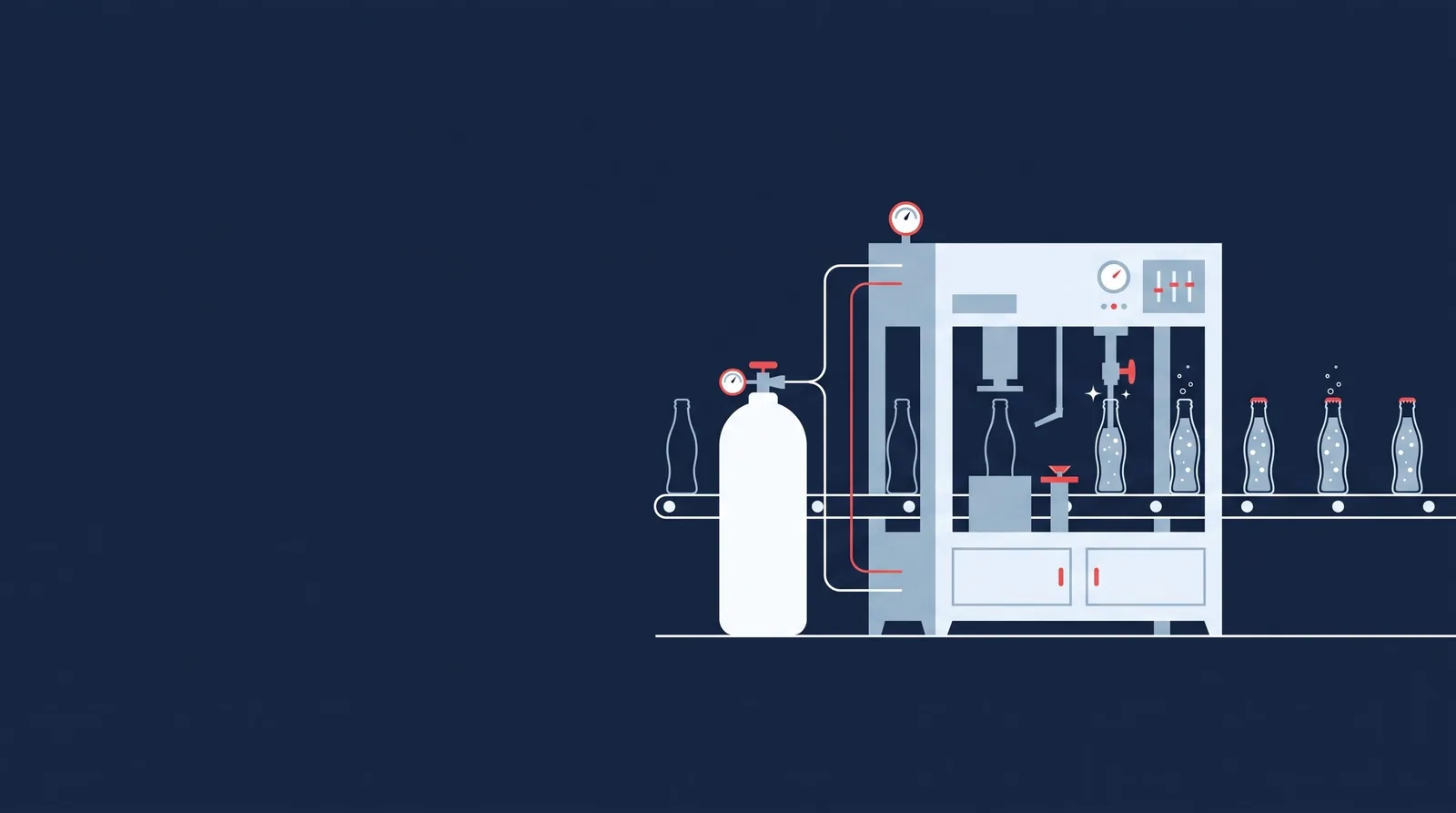
Before any liquid enters the bottle, the filler charges it with CO₂ to tank pressure.
Product then flows in under equal pressure — no foaming, no gas loss. That isobaric sequence is the only way to keep CO₂ stable in glass at commercial output, which is why carbonated is its own machine family here. The monoblock sits inside a configured line — CO₂ dosing and mixing, chiller, rinse–fill–cap, pasteuriser or warmer where needed, labeler, coder and packer — with production data confirmed on request.
Each model has its own section and permalink anchor for quote references.

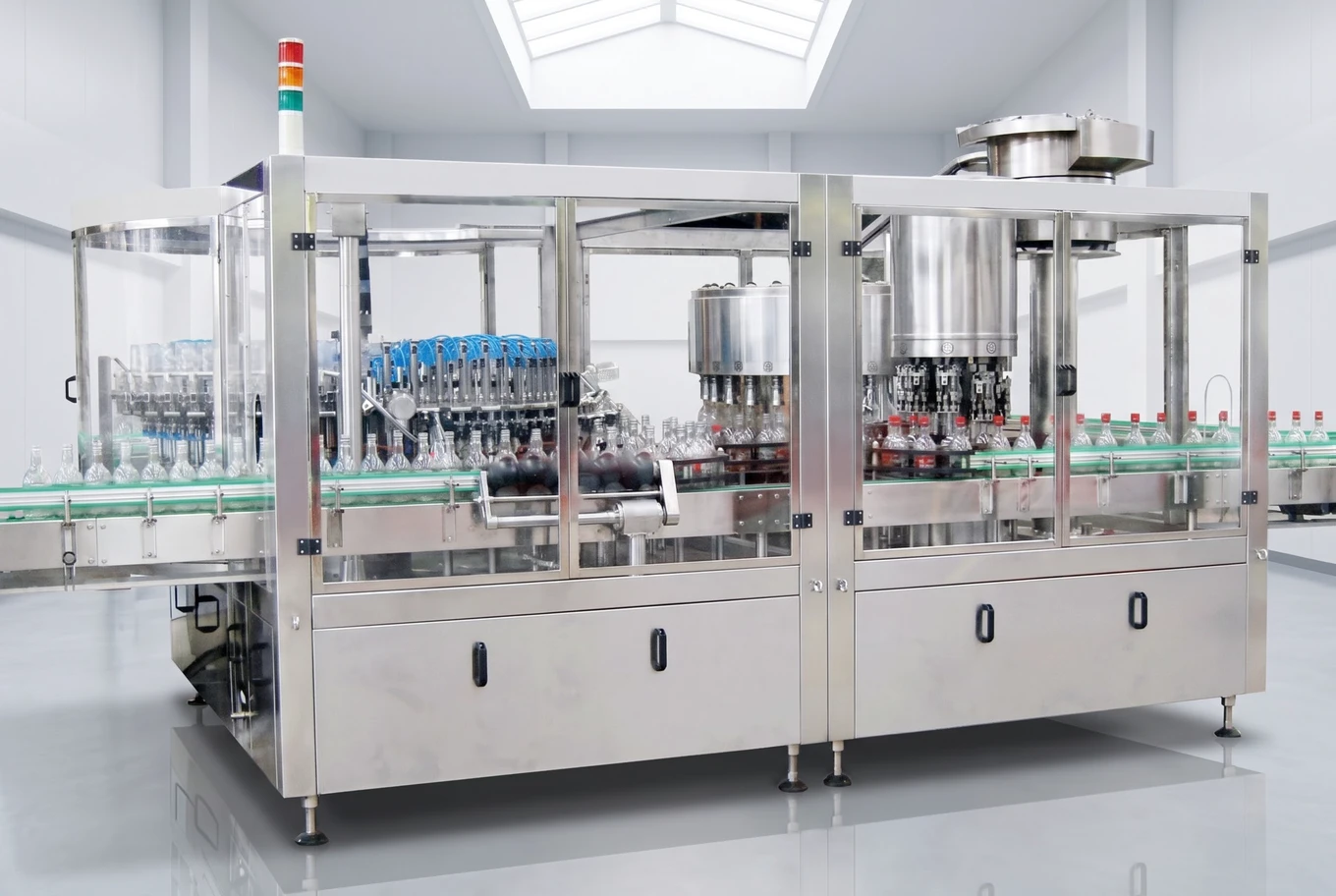
Isobaric (iso-pressure) filling monoblock for carbonated drinks in glass bottles — keeps CO₂ content stable at high output.
The filler charges each bottle with CO₂ to tank pressure before liquid enters, so product flows in under equal pressure — no foaming, no gas loss, stable CO₂ at commercial output.
Siemens PLC with photo-electronic detection on every sub-process stops the cycle before a fault propagates; bottle changeover is a small parts set, not a rebuild.
Craft and contract fillers running many formats keep one machine: soda, sparkling drinks and beer all fill on this isobaric platform.
| Filling principle | Isobaric (iso-pressure / iso-barometric) |
|---|---|
| Control | Siemens PLC, photo-electronic sub-process detection |
| Bottle transfer | Clamping-bottle-neck method, air-channel loading |
| Changeover | Few parts replaced for different bottle shapes |
Not listed? Detailed data sheet available on request.
Still-liquid fillers open the bottle to atmospheric or reduced pressure, and dissolved CO₂ flashes out of solution — the bottle foams over and the gas content drops. Isobaric filling pressurises the headspace with CO₂ first, so liquid moves in without degassing. This is why carbonated is a separate machine family in our range.
Our clamping-neck transmission handles the bottle by the finish, so changing shape means swapping the guide rails, starwheels and centering cam sets — a small parts kit per format. The fill and capping heights adjust by handwheel or recipe depending on configuration.
Yes — both are isobaric low-viscosity carbonated products. Beer adds CIP emphasis, oxygen-control options at the filler and pasteurisation after packing. Tell us the product pair and the line is configured around the tighter requirement.
Ration, micro-negative pressure, electronic valve and 3-in-1 monoblocks for still wine, spirits and liquor in glass.
View Wine & Spirits Machines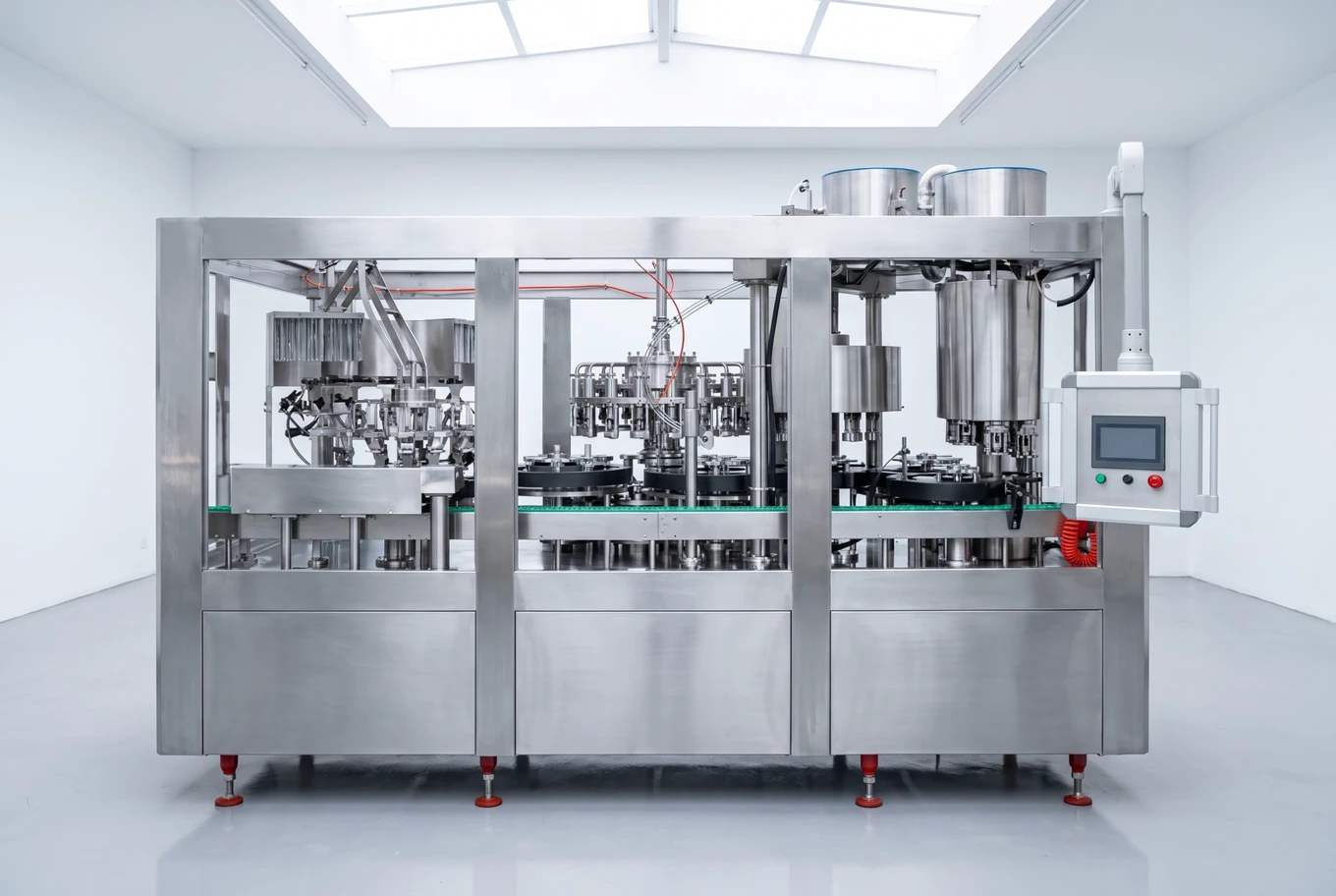
Hot-fill CGF and HD monoblocks for fruit juice and tea in glass bottles — 6,000 to 16,000 BPH.
View Juice & Tea Machines
The full glass bottle machine range with application guidance and line-configuration FAQ.
Back to Glass Bottle HubShare the drink specification, bottle format and target output — we will propose the isobaric platform and the complete line around it.