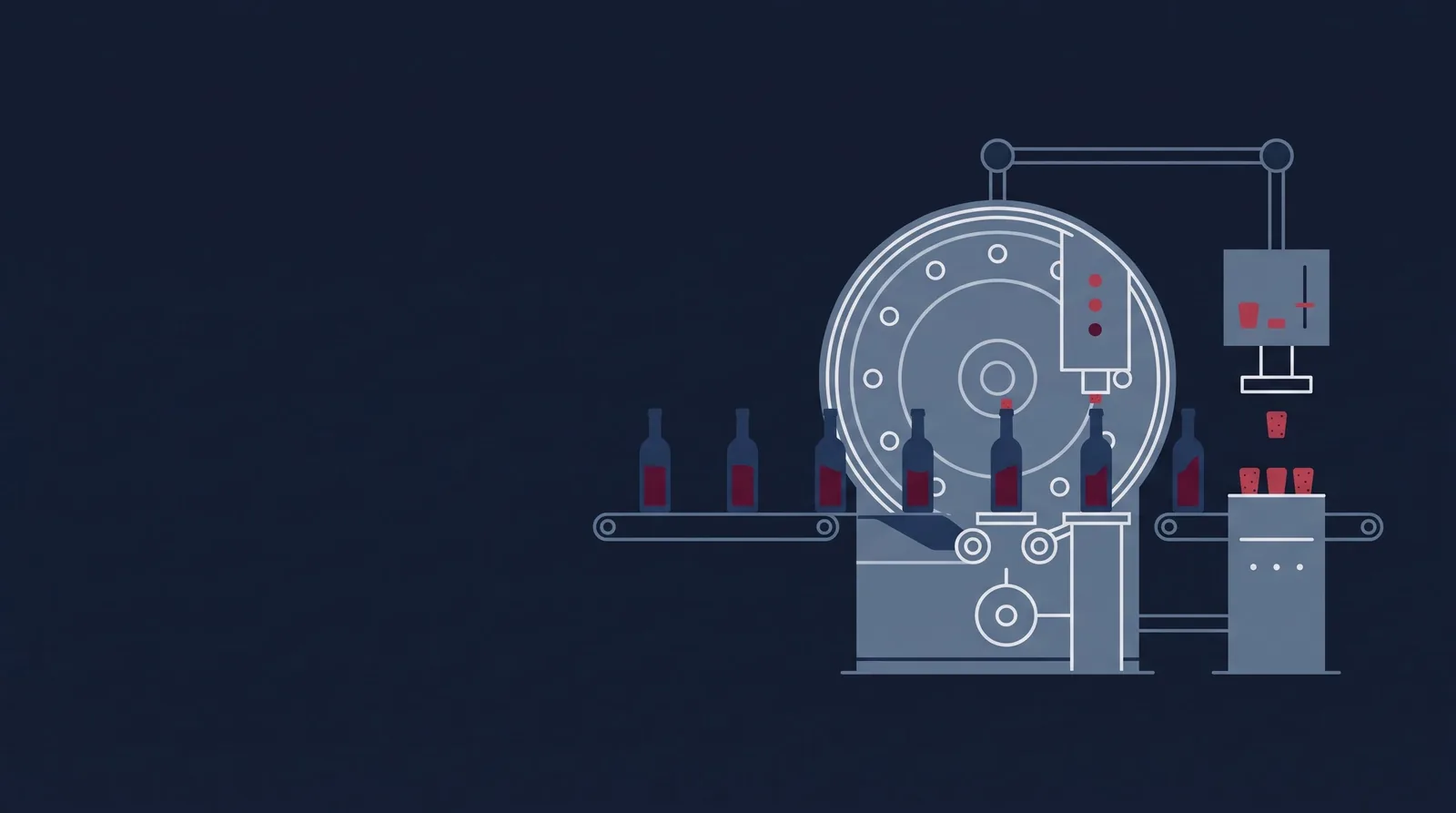
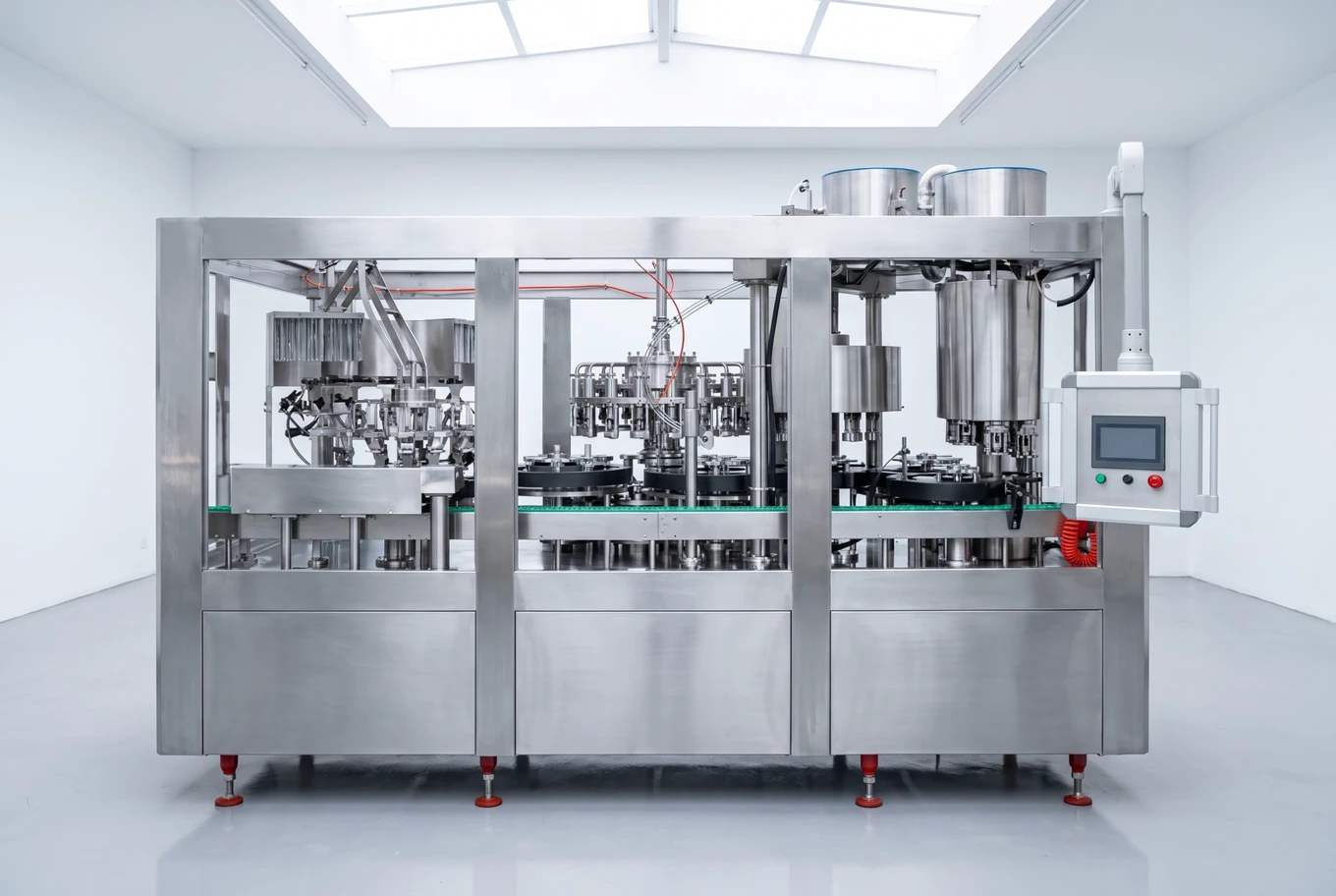
Juice & Tea
Hot-fill CGF and HD monoblocks for fruit juice and tea in glass bottles — 6,000 to 16,000 BPH.
View Juice & Tea Machines

Five machine families for still wine, liquor and spirits — choose by dosing principle: gravity with micro-negative pressure, piston rationing, intelligent electronic valves, or a full rinse–fill–cap monoblock.
Level, closure, changeover
Wine and spirits are thin, level-critical liquids in premium packages.
The fill has to hit the same level in every bottle, the closure has to seat without scratching, and the line has to change bottles without changing machines. This page is organised around exactly those three pressures — choose by dosing principle below, and send us your bottle drawing and target output for a line layout with budgetary pricing.
Five machine families. Click any model name to jump; each has its own anchor for quote references.

Micro-negative pressure filling for still liquids in glass bottles — handles low-viscosity products with gentle, level-accurate dosing.
A slight vacuum in the bottle chamber makes thin, still liquids rise to a mechanically identical level in every bottle — the standard choice when the fill level has to look presentation-grade.
Built on the same filling platform as our wine lines, so hygiene design, CIP and contact materials stay consistent across the range; closure stations (screw cap or cork) are configured per line.
Capacity, head count and utility data for this family are confirmed with your bottle drawing and target output — send both and we return a sized configuration.
Detailed data sheet available on request.

Piston-driven volumetric dosing for still wine, spirits, condiments and liquid medicine in glass bottles.
One main volumetric adjustment per run, held to ±1.5 ml at 3,000–6,000 BPH on 500 ml bottles — the dependable workhorse for single-SKU or low-SKU still products.
Speed is controlled by frequency conversion with stepless variation; overall adjustment is manual with manual fine-tuning, read out on a digital display with encoder feedback.
Piston rationing gives excellent accuracy with simple mechanics — less to commission, less to train on, and changeover is one setting, not a rebuild.

Single monoblock combining bottle rinsing, filling and screw-cap capping, driven by bottle-neck holding transmission.
Three process stations — rinsing, filling, capping — in one frame on a single drive, so bottles are handled once and the line footprint stays compact.
The bottle-neck holding transmission carries glass by the finish, keeping bodies off guide surfaces; rinsing and filling sections share our standard monoblock design.
One machine replaces three standalone stations: fewer transfer points, one control system, one FAT — and less floor space in the building.
Detailed data sheet available on request.

Electronic-valve dosing platform with per-head parameter recipes, changeover by recipe instead of mechanical adjustment.
Each filling head stores its own parameter recipe, so switching SKU means selecting a program instead of adjusting hardware — built for operations running many bottles, volumes and closures.
Machine size is customised to your line; built to Topking Standard under ISO 9001 with CE certification.
If you run more than a handful of SKUs, the electronic platform pays back its price difference in changeover time alone.
Detailed data sheet available on request.

Combined rinsing, filling and natural-cork insertion for still wine — the corking station replaces the capping head of a standard 3-in-1.
The wine-specific version of our 3-in-1 monoblock: the capping head is replaced by a corking station that inserts natural or technical cork under vacuum.
Rinsing and filling sections are shared designs with the standard monoblock, so line behaviour, spares and operator routine stay consistent between the two.
Corked still wine without a second machine: one frame, one transmission, one commissioning — sized for wineries from entry volume upward.
Detailed data sheet available on request.
Every figure below comes from the machine's own data sheet on this page; an em dash means it is confirmed with your bottle drawing and target output — send both and it comes back filled.
| Micro-Negative Pressure | Ration Piston | 3-in-1 Rinse-Fill-Cap | Electronic Valve | Wine Corking 3-in-1 | |
|---|---|---|---|---|---|
| Dosing principle | Micro-negative pressure — in-bottle vacuum rise | Piston volumetric dosing | Rinse–fill–cap monoblock, one frame one drive | Electronic valve, per-head parameter recipes | Rinse–fill monoblock + vacuum cork insertion |
| Calibration capacity | — | 500 ml | — | — | — |
| Filling accuracy | — | ±1.5 ml | — | — | — |
| Output | — | 3,000–6,000 BPH (500 ml/bottle) | — | — | — |
| Speed control | — | Frequency conversion, stepless variable | — | — | — |
| Adjustment | — | Manual overall + manual fine-tuning, digital display and encoder | — | — | — |
| Model grade | — | — | — | TOPKING-L-04 | — |
| Machine size | — | — | — | Customerised | — |
| Standard | — | — | — | Topking Standard | — |
| Certification | — | — | — | ISO 9001, CE | — |
| Built for | Still low-viscosity liquids where the level must read identically bottle to bottle | Single-SKU or low-SKU still products: wine, spirits, condiments, liquid medicine | Compact footprints — one machine replaces three standalone stations | Operations running many SKUs — changeover time pays the price difference | Still wine in cork — one frame, one commissioning, entry volume upward |
Micro-negative pressure filling. A slight vacuum in the bottle chamber makes the liquid rise to a mechanically identical level in every bottle regardless of filling volume, which is why it is the standard for presentation-grade still wine.
A piston ration filler sets volume mechanically — excellent accuracy (±1.5 ml) with one main adjustment per run. An electronic valve stores recipes per head, so switching SKU means selecting a program, not adjusting hardware. If you run more than a handful of SKUs, the electronic platform pays for its price difference in changeover time.
The standard 3-in-1 monoblock caps screw closures. For natural or technical cork, we build the wine version — a rinse–fill–cork monoblock with a vacuum corking station. The rinsing and filling sections are shared designs, so line behaviour stays consistent between the two.
Yes. For spirits above 40% ABV we specify alcohol-rated seals, explosion-protected electrical options where required by local code, and stainless contact parts throughout. Describe the spirit and the market and we configure to it.
Hot-fill CGF and HD monoblocks for fruit juice and tea in glass bottles — 6,000 to 16,000 BPH.
View Juice & Tea Machines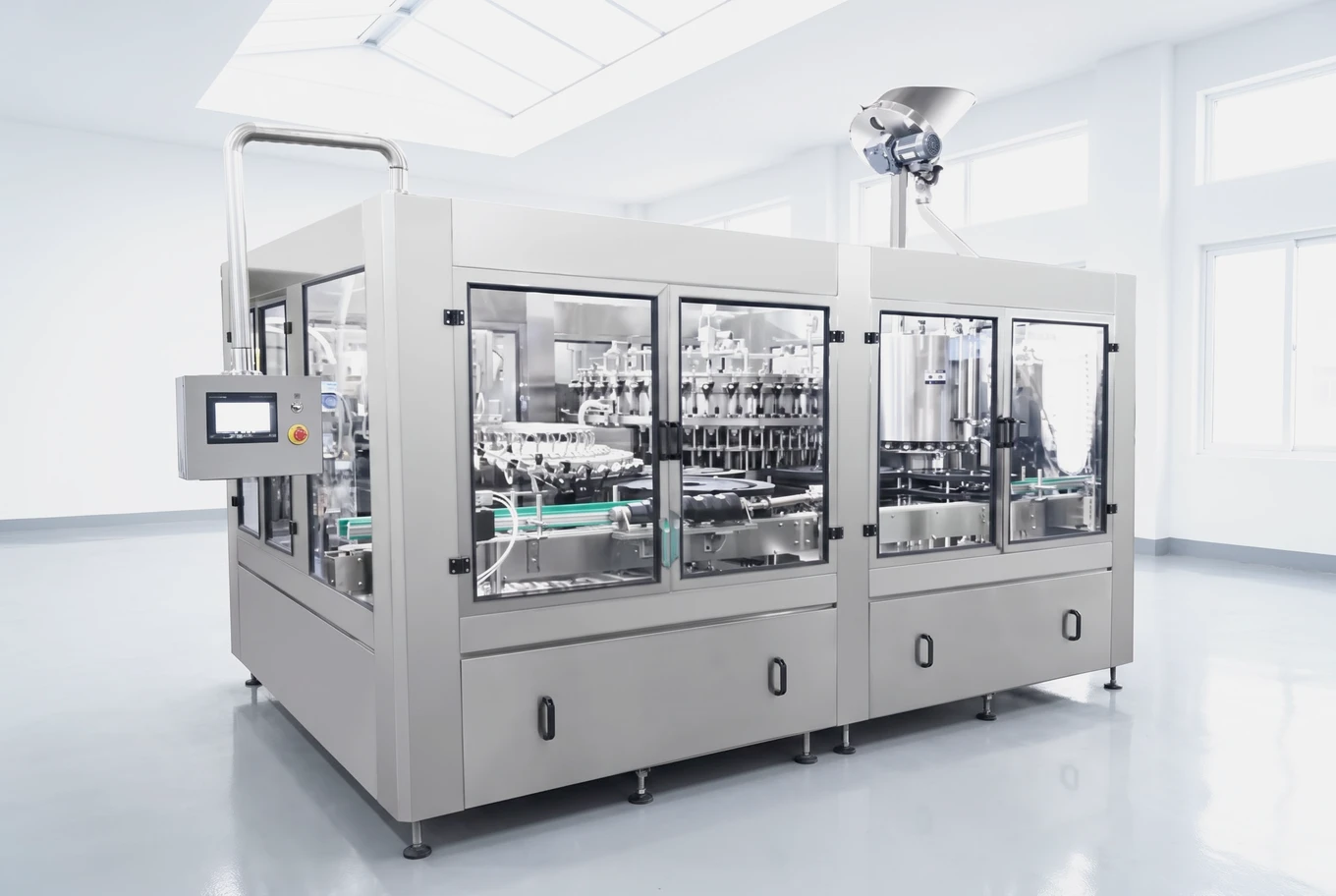
Isobaric 3-in-1 monoblocks for sparkling drinks, soda and beer in glass bottles.
View Carbonated Machines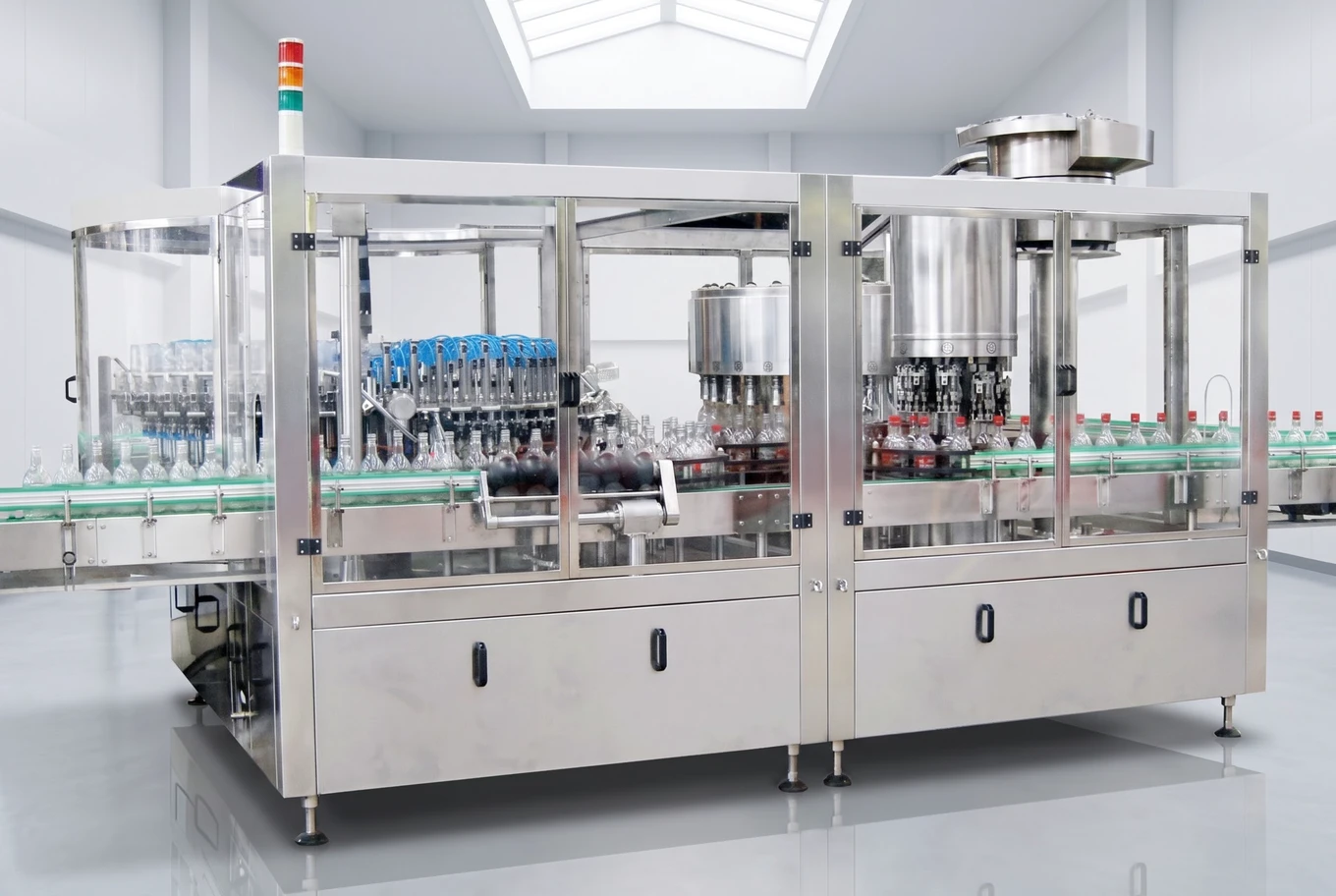
The full eight-family glass bottle range, application guidance and line-configuration FAQ.
Back to Glass Bottle HubTell us the product, the bottle and the output target — you will get a machine recommendation and a line layout from our engineering team.